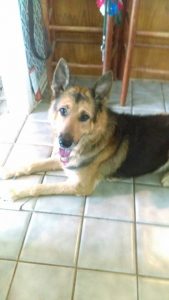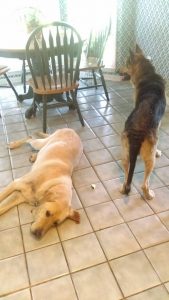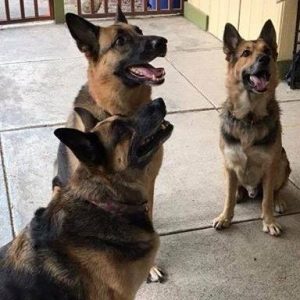
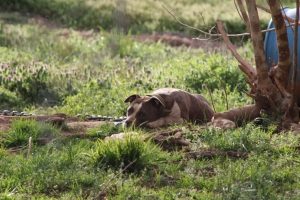
A gorgeous morning, so out and about to see how some of our four legged friends were spending their day.  Those babies who love us unconditionally, no matter how they are treated. 

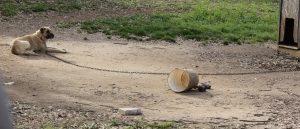
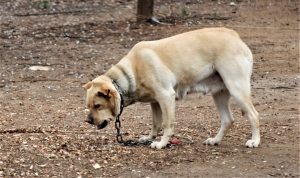
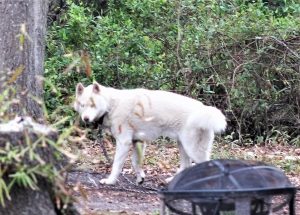
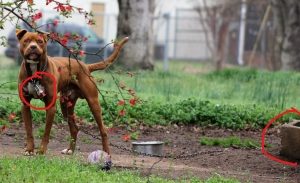
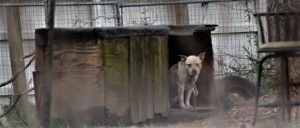
As you can see in the first picture above, this gorgeous dog is lying outside, with an obvious heavy chain and a barrel for his/her shelter.  While barrels may can be considered shelter, at the very least, the barrel should be in some sort of frame off the ground ” if” we are going to consider them shelter. ( my vote is no, but at least there are no holes in the barrel, ore to come on that issue) .   Look at this dog, truly look.   Sad eyes, wanting to be with his people, but nope, he lies there, waiting, hoping, that someone will come play with him, get him off that chain he lugs daily, and let him be a part of the family he loves.
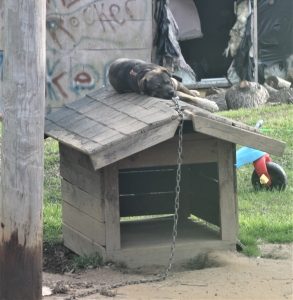
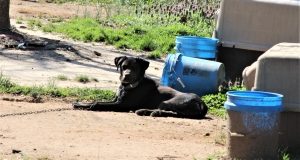
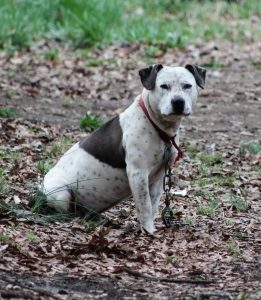
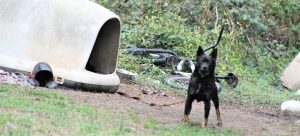
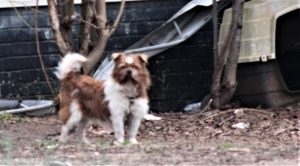
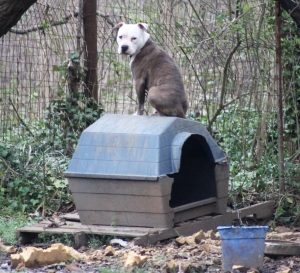
Moving along, we find this sweetheart.. check out his/her shelter?  I put a question mark because of the obvious openings throughout.  We can count out any insulation from the cold or heat, any waterproofing, and the dog would prefer to lay on the top of the house than actually in it, again with a chain around his/her neck.  Really people, someone please tell me why?
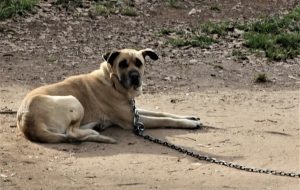
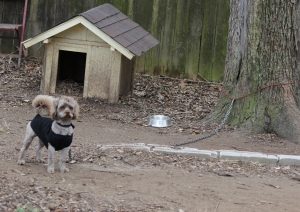
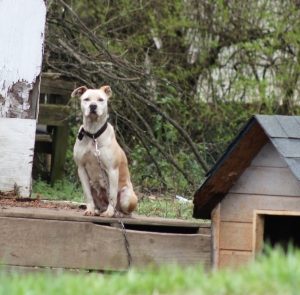
As we traveled a little further, here is this cutie.  Not only do we have a huge chain, but we do not have any water as I am sure the chain turned over the water.  Okay people, its bad enough you chain your dog in your yard and basically ignore them, so lets use those brains a little and stake the water bucket somehow so that the chain does not knock it over.   ( Better yet, lets unchain Cleveland County and outlaw these awful things)
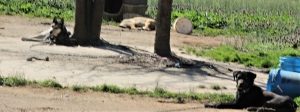
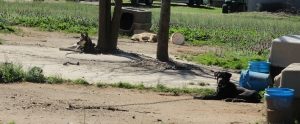
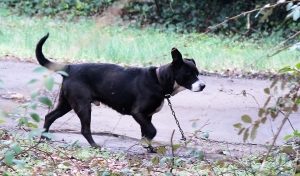
Here we have three dogs, all chained out, just far enough they cannot interact with each other. Maybe people need to look up what it means to be a ” pack animal”.   And please look closely.  the dog in the back, not only has no water, bucket turned over, but his/her house is upside down. 
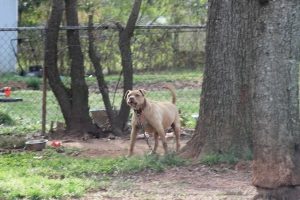
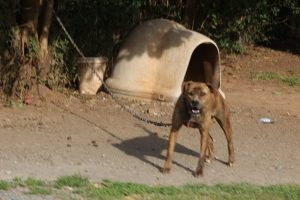
Two more, pitiful babies, just wanting attention, yet, banished to live outside on a chain. Our photo session was cut short ( hence the name of the article interrupted) as we got a call about an aggressive dog.  First, we are well aware we are not animal control, but as animal advocates an a 501c3 non profit rescue, and as volunteers and people who give a damn about what happens to the animals.  ( We actually got several calls this weekend but this blog can only cover so much)  Many times the people have no clue who they are calling,asking who they are talking to, or saying so and so told them to call us, we may could help.    I bring up today for a couple reasons.  We never ever mind trying to help. We do it because we love dogs and we know they are often abused, neglected and/or abandoned. Today’s visit had a couple issues I think should be addressed.  Let me clarify that I am making educated guesses on what happened between dogs, and in these situations as I was not there when the issues actually happened. 

We got a call that a dog had attacked another one, and that the neighborhood was afraid to let their kids out.    After discussion, there was a dog loose and due to the dog fight, people were frightened.   The number one thing is that just because dogs get into a fight, it does not mean the either dog is going to attack people.   The people did call the on call ACO, who did come, would not pick up the dog because the dog growled at him ( hey, I am just repeating what I was told) , proceeded to set a trap in the back yard where several tethered dogs were and left.   So now we have a scared neighborhood, afraid to let their kids come out and play, and no one wants to pick up the dog?????   As much as I do not like them, thats what that catch pole is for, to keep you from getting bit. 

Stopping for supplies, we headed that way to try to assist.  We talked to a few of the neighbors, while one had made his children stay inside ( smart move until you assess the situation), he said the dog was scared, not acting aggressive toward people at all.  From there we moved to where the dog was attacked.  The dog had a puncture wound in his throat, the owners had bandaged the wound and were waiting for the vets to open, injured dog was running around outside with them, injured but definitely going to survive.  The trap was indeed in the back area of their yard with several other dogs resided. ( not exactly where you would want to put, could cause more fights, and its hard to defend oneself on a chain/cable)  Also the local PD had been following the dog in their vehicle but had not been able to catch him.  We asked a few more questions and off we went to hunt the boy.

And yes we found him, he was scared to death, running away from everyone, I did get out of the car, got his attention for a second, but he skirted up a dirt road, hopefully headed home, wherever that may be, aggressive no, frightened yes.   One must remember a frightened dog will choose fight or flight.  This boy was definitely choosing flight.  

What this writer took from her years in rescue and talking to all involved.   Two unaltered males ( wait sounds like how Clifford’s got started) getting into an altercation probably over a female in heat.  Many of the dogs in the area were not spayed.   No true danger of a person getting hurt.  No aggressive to people dog, not even sure aggressive to dogs, dog.  The dog that went to the vet was a small dog, and if this other dog had truly wanted to do real harm, it would not have been hard. 

What needs to be done?  Fix your dogs people!  If you do not have the funds, check out low cost spay/neuter clinics, talk to rescues to see if they know of places that can help, but fix your dogs!   Do you truly think it is ok to keep you dog on a tether, unaltered, and let an unaltered male come up and rape them?  Your dog has no choice!  It truly is rape and you are guilty by letting it happen.  Get your dogs off those chains and make them truly part of your family.  If you can’t, find someone who can.   (Sidenote, training for ACOs, as if the dog had been dangerous, you do not leave in the neighborhood)  Dogs deserve better!


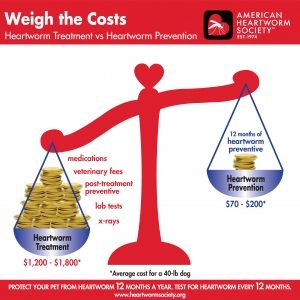
One of the most prevalent diseases seen in dogs in this area since I got involved in rescue almost nine years ago is heartworms.  It is also one, that in early stages, may not show many signs, in late stages, has very serious, painful symptoms that can be fatal without treatment, and can be prevented for under $10 a month.   As you can tell from the graph, the treatment that is recommended by the American Heartworm Society, (we will discuss the differences and why in a few) is very expensive so I guess my question is why do we see so very many dogs test positive for heartworms?

Is it lack of education? Do people not believe it exists?  I know people who say they truly care about their dog, and yet have not given preventive and have been shocked when their dog tested positive, so I am not sure of the reason why, but lets delve into how dogs get heartworms, what happens and why we as their guardians need to give them that monthly pill ( or that six month injection) to prevent this horrible disease.

Dogs are natural hosts for heartworms.  Heartworms can live inside a dog,  mature, reproduce offspring. Once mature, a heartworm can live five to seven years inside a dog. Untreated, dogs can harbor several hundred heartworms in their body, having adverse effects of the heart, lungs, and arteries.

‘When a mosquito bites and takes a blood meal from an infected animal, it picks up these baby worms, which develop and mature into “infective stage” larvae over a period of 10 to 14 days. Then, when the infected mosquito bites another dog, cat, or susceptible wild animal, the infective larvae are deposited onto the surface of the animal’s skin and enter the new host through the mosquito’s bite wound. Once inside a new host, it takes approximately 6 months for the larvae to mature into adult heartworms. Once mature, heartworms can live for 5 to 7 years in dogs.’ ( American Heartworm Society)

Can you tell if you dog has heartworms?  Unless advanced stages, probably not.  Many times in early stages there are not many visible signs.  I can say that after nine years, many times, when we pick up a dog that has been living outside his/her entire life, not been on prevention, and sometimes has a swollen abdomen ( when we first started the rescue, we thought a few female dogs might be pregnant and it turned out to be heartworms)I now will make the statement, I bet the dog will be heartworm positive, and 9 out of 10 times, the dog is.   As the disease progresses, if you are interacting with your dog you may notice  a mild persistent cough, reluctance to exercise, fatigue after moderate activity, decreased appetite, and weight loss.  Dogs  may develop heart failure and the appearance of a swollen belly due to excess fluid in the abdomen. Dogs with large numbers of heartworms can develop a sudden blockages of blood flow within the heart leading to a life-threatening form of cardiovascular collapse. This is called caval syndrome, and is marked by a sudden onset of labored breathing, pale gums, and dark bloody or coffee-colored urine. Without prompt surgical removal of the heartworm blockage, few dogs survive.

PLEASE REMEMBER  ALL OF THE ABOVE CAN BE PREVENTED BY A MONTHLY PILL OR A SIX MONTH INJECTION!!

Get Your Dog Tested!

From the American Heartworm Society:

. All dogs should be tested annually for heartworm infection, and this can usually be done during a routine visit for preventive care. Following are guidelines on testing and timing:

  • Puppies under 7 months of age can be started on heartworm prevention without a heartworm test (it takes at least 6 months for a dog to test positive after it has been infected), but should be tested 6 months after your initial visit, tested again 6 months later and yearly after that to ensure they are heartworm-free.
  • Adult dogs over 7 months of age and previously not on a preventive need to be tested prior to starting heartworm prevention.  They, too, need to be tested 6 months and 12 months later and annually after that.
  • If there has been a lapse in prevention (one or more late or missed doses), dogs should be tested immediately, then tested again six months later and annually after that.

Annual testing is necessary, even when dogs are on heartworm prevention year-round, to ensure that the prevention program is working. Heartworm medications are highly effective, but dogs can still become infected. If you miss just one dose of a monthly medication—or give it late—it can leave your dog unprotected. Even if you give the medication as recommended, your dog may spit out or vomit a heartworm pill—or rub off a topical medication. Heartworm preventives are highly effective, but not 100 percent effective. If you don’t get your dog test, you won’t know your dog needs treatment.


Oh No… My Dog Tested Positive!

The question comes up many times about how to treat.   As a rescue, we treat per the guidelines of the American Heartworm Society .     Only one drug, melarsomine, has been approved by the FDA to treat heartworms in dogs.   While there are risks involved, most adult heartworms are eliminated within 1 to 3 months.   Cage rest, restricted exercise decreased the chances of complications from the treatment.  Per the American Heartworm Society, ” Long-term, continuous use of heartworm preventives alone to treat heartworm infections, however, is not recommended as an alternative to melarsomine, because it is well documented that additional damage to the heart and lungs occurs the longer adult heartworms are present.”

 IT IS YOUR RESPONSIBILITY!

Once again, it is your responsibility as a dog mom or dad to make sure your dog has preventive.  You can purchase them in a single dose each month from the vets office, you can buy them in packs of three months, six months, or 12 months.  You can get your vet to write a prescription and order from a website if you can find a better price.  Regardless it is still less than $10 a month to prevent your dog from having a horrible disease and possibly suffering a painful death.


Need More Information, Check out the following:

https://d3ft8sckhnqim2.cloudfront.net/images/pdf/HeartwormTreatmentGuide_PetOwner.Color.pdf?1418599065

https://www.heartwormsociety.org/about


Another dreary, rainy, cold Sunday morning and in less than an hour, in a few blocks the following pictures in this article were taken.    Please take a few minutes to truly look into the eyes of these animals.  You can actually see the sadness.  Once again, dogs are social animals, that is why they are called ” pack animals”.  They do not want to be left alone, isolated, outside on a chain.

From the Municipal Code library, Cleveland County NC,  Code of Ordinances, Section 3-7 Cruelty to Animals

(h)It shall be unlawful for an owner or keeper of any animal to restrain an animal in an unsafe manner as outlined under G.S. § 14-362.3. In addition, a tether shall be at least ten (10) feet long with swivels on both ends, shall not exceed ten (10) percent of the animal’s body weight and shall be attached to a properly fitting harness or collar to prevent choking, strangulation, unjustifiable pain, suffering or risk of death. A tethered animal shall have access to suitable and sufficient clean water, food and appropriate shelter.

Above is Cleveland County’s current tether law.   1) while in these pictures above, the chains are probably 10 feet long, how many times are they not, and with the hundreds of animals chained, how often can the ACO’s really go out and check all of them? 2)  not to exceed 10 percent of the animal’s body weight.  I would bet in most cases, if you weighed the chains most of these dogs are hooked to, they would weigh much more than 10 percent. Do the math, a 40 pound dog, chain would be 4 lbs max. 3) properly fitting harness or collar. Many times dogs chained outside, people forget to check the collars and the collars become too tight, embedded over time, some are on choke collars, which can be very dangerous and cause strangulation. 4) access to food, water and shelter. While many times dogs do start out with access, if they are able to wrap the chain around anything, trees, poles, their houses, whatever, it can stop them from being able to get to any of the above.  5) swivels on both ends, I think that is self explanatory and can be seen in the photos and how many are actually chained as to whether there are swivels on both ends.

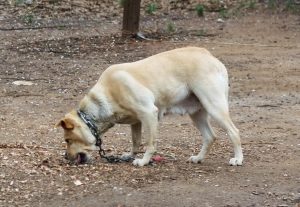
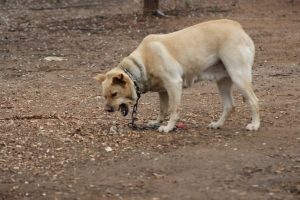
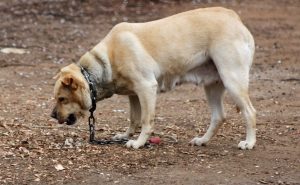
Here is a scary example.  There is a chain around this dog’s neck used as her collar?  Then the chain is hooked to a cable.   Chains ARE NOT collars.   The dog is also eating something off the ground instead of having bowls with food. This is also a female dog. Is she spayed?  If not, when she comes into heat, she has no way to protect herself from male dogs.

CHAINING IS INHUMANE

  • U.S. Department of Agriculture“Our experience in enforcing the Animal Welfare Act has led us to conclude that continuous confinement of dogs by a tether is inhumane. A tether significantly restricts a dog’s movement. A tether can also become tangled around or hooked on the dog’s shelter structure or other objects, further restricting the dog’s movement and potentially causing injury.”
  • According to the Association of Shelter Veterinarian’s Guidelines for Standards of Care in Animal Shelters, “Tethering is an unacceptable method of confinement for any animal and has no place in humane sheltering. Constant tethering of dogs in lieu of a primary enclosure is not a humane practice.”
  • The American Veterinary Medical Association  stated “Never tether or chain your dog because this can contribute to aggressive behavior.”
  • The Centers for Disease Control (CDC) concluded in a study that the dogs most likely to attack are male, unneutered, and chained.

Most chained dogs must eat, sleep and eliminate in a small area, are often basically ignored by their owners, fed and watered sporadically partially due to the fact water and food bowls get turned over, suffer from lack of exercise, grass becomes hard ground, collars can become too tight, embedded, can strangle, many times vetting is not received, dogs cannot escape the storms, cold, heat, and are isolated from their family.

Another worrisome issue if you look at these pictures, most of the dogs are located around trash, or things thrown out of the house.  People dogs are not your trash. They are living, breathing animals who want to be part of your family.  If you cannot take care of them and let them be a part of that family why get them?  Please don’t say you want them to guard your house.  They cannot guard your house on a chain.  All they can do is bark and since they are unsocialized living on a chain, they are going to bark at friend and foe.

And why we need to hang locks on our dogs necks?   I will never get it.     North Carolina Counties who have banned tethering:

Asheville, North Carolina
Cary, North Carolina
Chapel Hill, North Carolina
Clayton, North Carolina
Cumberland County, North Carolina
Davidson, North Carolina
Durham County, North Carolina
Enfield, North Carolina
Forsyth County, North Carolina
Guilford County, North Carolina
Hertford, North Carolina
New Hanover County, North Carolina
Roanoke Rapids, North Carolina
Weldon, North Carolina
Woodland, North Carolina

Can Cleveland County be proactive instead of reactive? Can we put the welfare of the dogs first?  How simple would it be to enforce if its not allowed?   So much easier than how long chain is, how much it weighs, if it has swivels, etc..

PLEASE UNCHAIN CLEVELAND COUNTY


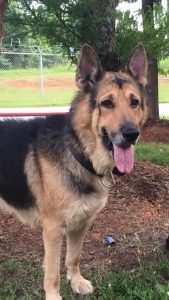
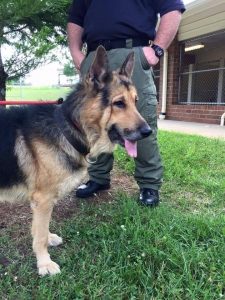
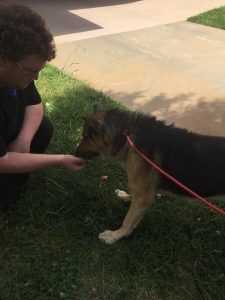
In June of 2017, I was asked to check out a small dog in the bite quarantine at CCAC for possible rescue. While in the quarantine building, I noticed the dog next door to the one I went to visit.   There stood a GSD, barking his head off, and as usual I immediately looked at the former rescue coordinator and said, ” What’s his story?”.   Here is where the story gets different.  Where perception and training truly becomes life or death for so many animals dumped at shelters across the country.   Her response was, ” That is the meanest dog I have ever seen.  We can’t get near him. He won’t stop barking.”     What did I see?   Well first let me say, I am no expert, but I did grow up with GSDs and being in rescue for almost nine years now, I do try to sponge up any and everything I can.  So I saw a very frightened and nervous  GSD.  One that was trying to take the flight instead of fight, but being in a kennel could only flight so far.   And I also knew I was coming back with help with a mission to save this boy, because sometimes you just know.. and I just knew that this emaciated boy was scared to death and needed out of that confined kennel.

Once home, I called GSD eval expert and good friend Aliceia Atkinson  and enlisted her help.  Shelly and I met her over at Animal Control, and of course the staff was convinced this boy was aggressive so with a staff member in the building, but as much out of the dog’s site as possible, Aliceia went to his kennel and went to work.  Check out the videos in the kennel which took her maybe five minutes?

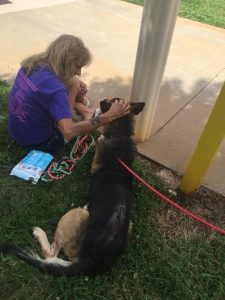
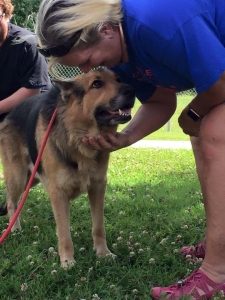
Then Reckless and Aliceia came out of the kennel and walked around outside and everyone met this sweet boy.  Well most all, I think there was maybe one staff member that was still a little frightened of him but most realized he was as frightened of them as they were of him.

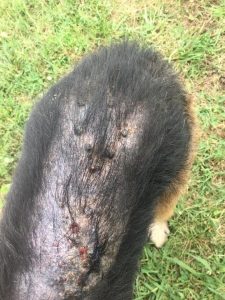
The amazing Shellinda Fisher-Hardie with Jericho’s Wish pulled him and he was off to the vets for his skin and everything else needed.   Awesome Jan Lineberger Young stepped up to foster Reckless while he was in Cleveland County until transport.  The Army was at full force, and this boy was safe!

Reckless did wonderful in his foster home.  He had previously lived on a chain where no one really checked on him.  His skin started to heal, he started to gain weight and he showed what a wonderful dog he was.  He then transported up to New Jersey to Shellinda where he landed in his failed foster/forever home with the Craft family.  He has two GSD siblings and he is so very happy.

I do believe everything happens for a reason, and he was the true reason I was suppose to be in the bite quarantine that day. He was crying for help with his barks and frightened trying to flight or fight in a kennel.  Reckless is one of many many examples as I said, that happen daily at shelters across the country. Dogs die labeled as  aggressive, feral, and other terms when it is simply fear.   Put yourself in their place.  Dumped, taken out of the only place they have known as home, and in a frightening place to them.    Shelters need to get their employees training to be able to not only identify these issues correctly but to be able to work with the dogs on them.   We as animal advocates should be trying to save as many as possible and shelters should be hiring animal advocates, people who care and people who want to learn how to help these poor precious souls who are being dumped daily at the shelters.

So the next time you hear a dog barking, or think a dog huddled in a corner in fear makes the dog aggressive or feral, take a moment to think about it , truly think about what that dog is going through.  You may just change your mind.